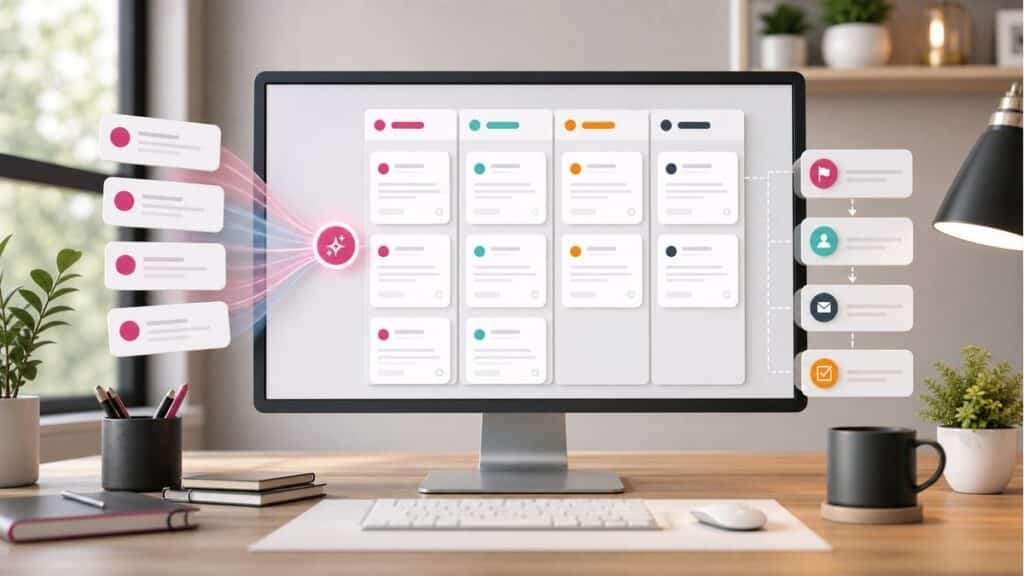
Multi-location WordPress form routing often starts with a copy-and-paste decision: duplicate the inquiry form for every branch, office, or service area. That works until fields drift, tracking splits, and staff stop knowing which version is current.
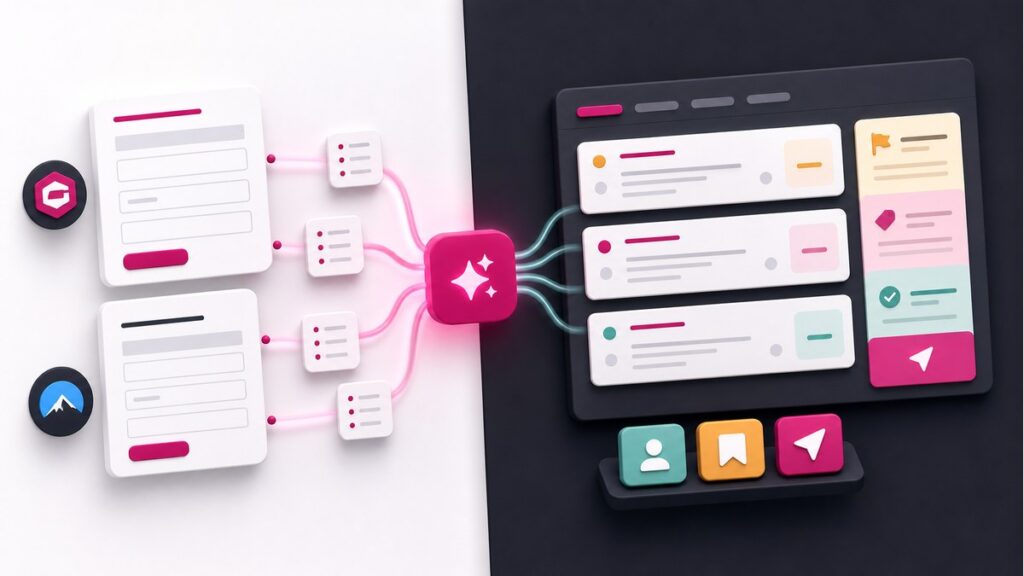
A shared form can be easier to maintain. Keep one stable intake, collect the few answers that determine destination, and produce a reviewable routing recommendation after submission. The goal is not to hide the decision inside a black box. It is to give the right team a clear, explainable handoff.
Write the destination rules before changing the form
Start with the destinations, not the AI prompt. For each location or team, write the facts that make it eligible and the reasons it should not receive an inquiry.
- Coverage: postcode, city, region, travel radius, or remote-service availability.
- Service: the work that location can actually deliver.
- Customer type: residential, commercial, public-sector, wholesale, or another useful distinction.
- Constraints: licensing, language, minimum project size, operating hours, or known exclusions.
- Fallback: the owner who reviews no-match and ambiguous inquiries.
If staff cannot agree on those rules, duplicating the form will not solve the routing problem. It will spread the disagreement across more pages.
Ask for signals the visitor can answer
Good routing inputs are facts the visitor knows: location, requested service, preferred appointment method, customer type, and timing. Avoid asking for internal categories or forcing a visitor to understand your organization chart.
Keep the input set small. A routing decision rarely needs every field in the submission. The field-minimization guide shows how to select only the data needed for an action. Fewer inputs make the recommendation easier to inspect and reduce the amount of personal information handled in the review.
When a critical signal is missing, do not guess. Use the Missing Information Review action to identify the gap, then route the submission to a person or follow-up step that can resolve it.
Keep hard rules separate from recommendations
Some routing rules should stay deterministic. If a postcode has one legal service owner, or a form explicitly names a branch, a normal conditional rule is clearer than an AI judgment. Many form builders already support conditional notifications; for example, WPForms documents condition-based notification rules.
Use a recommendation when several signals need interpretation: a visitor describes a service in their own words, multiple branches could help, or the best destination depends on location plus project type. The Sentient Forms Routing Recommendation action is designed to suggest a destination and provide context for review.
Use rules for facts. Use a recommendation when the facts still need judgment.
Require an explanation with every destination
A destination without a reason is hard to trust and harder to correct. Ask the review to return the proposed location or team, the submitted facts that support it, any missing information, and whether a human needs to confirm the choice.
Keep the explanation short enough for the receiving team to scan. “North office: postcode is inside its service area and the request matches commercial maintenance” is more useful than a long summary of the entire entry. Link back to the original submission or Sentient Forms review record when the reviewer needs the full context.
Design the no-match lane first
The dangerous routing error is not an imperfect recommendation. It is an inquiry that disappears because no destination looked confident enough. Create a visible fallback lane before automating any happy path.
- Send missing-location cases to clarification.
- Send overlapping service areas to a named dispatcher.
- Send out-of-area requests to an approved referral or decline process.
- Send unsupported services to a general review lane instead of silently dropping them.
Track how often the fallback lane is used. A rising no-match rate usually points to a changed service area, a missing form question, or a rule the team has not documented.
Do not confuse a recommendation with notification delivery
Sentient Forms can recommend the next destination, but that does not mean every Form Source can have its recipients, webhooks, statuses, or native entries changed automatically. Gravity Forms has the deepest native workflow support. Contact Form 7, WPForms, and Elementor Pro Forms use limited after-submission paths through the opt-in Sentient Forms Submission Ledger.
Keep the existing notification path working while you test the recommendation. If you later connect a confirmed result to another automation, treat that as a separate change with its own rollback and evidence. The form ownership guide helps define who watches the fallback while the workflow is new.
Test every route with synthetic submissions
Build a small route test pack before a real inquiry depends on it. Include one clear example for each destination, one overlap, one missing location, one unsupported service, and one deliberately contradictory submission.
- Submit the examples through the real form, not directly into the review service.
- Wait for the action to finish and inspect the promised review surface.
- Confirm the destination, explanation, missing-information flag, and fallback behavior.
- Verify the original notification still reaches its expected owner.
- Record overrides, adjust the written rules, and repeat the failed case.
Install Sentient Forms from WordPress.org and test one routing recommendation on a staging or non-production form. Start with the no-match lane; a workflow is only useful when the uncertain cases still have an owner.
Frequently asked questions
Not always. One shared form can work when the destinations use the same core questions and the routing rules are clear. Separate forms may still be better when locations need materially different fields, consent language, branding, or legal terms.
Use deterministic conditional rules when a submitted fact maps directly to one destination. Use a reviewable recommendation when several signals need interpretation, multiple destinations could fit, or the visitor describes the request in free text.
Do not assume it will. A routing recommendation is a review result. Notification, webhook, native-entry, and status controls vary by Form Source and must be tested separately before they are changed.