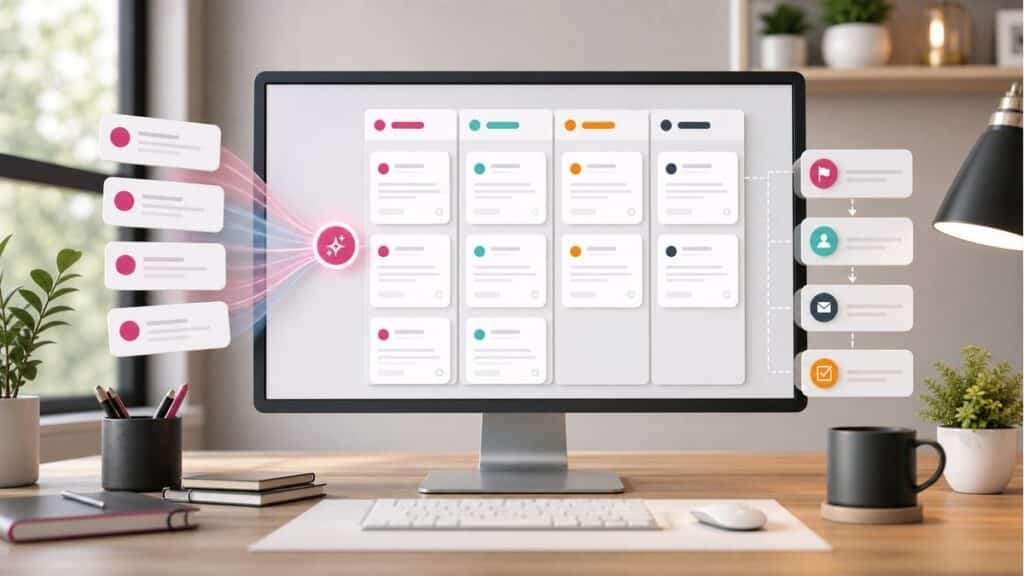
An event inquiry can look promising and still be impossible to quote. The date is there, but not the venue. Guest count is a guess. Meanwhile, the requester chose three services without saying which one matters most. Someone replies, waits, and follows up again.
A WordPress event inquiry form should prepare a useful first review, not force staff to decode a free-text message. With a small set of conditional questions and a bounded AI review, a WebMaster can help the event team see what is known, what blocks a quote, and who should respond next.
Define what quote-ready means
“Complete” is too vague. Write down the minimum facts a specific team needs before it can prepare a responsible estimate or schedule a useful call.
- event type and the service being requested;
- date, time window, location, and whether those details are firm;
- estimated attendance and any meaningful range;
- venue status, access limits, and the venue contact when relevant;
- required deliverables, setup needs, and decision deadline;
- budget information only when the business genuinely uses it to shape options;
- the person who can approve the next step.
For example, a photography studio, caterer, venue, rental company, and production team will define quote-ready differently. Build the checklist around the service, not around a generic event template.
Use short conditional paths
Start with a few questions that choose the path: service, event type, date status, location status, and attendance range. Reveal detailed questions only when an answer makes them relevant.
A requester who needs equipment rental may need delivery access, power, setup, and collection details. A person asking about a meeting room does not need to work through the same list. Conditional paths reduce abandonment while preserving the facts staff use.
Give examples next to fields that are easy to misunderstand. The W3C form-instruction guidance recommends stating the purpose and expected format of an input, including whether it is required.
Flag only the quote blockers
Every blank field does not deserve the same attention. Missing venue details may change travel, setup, and availability. By contrast, a missing referral source probably does not stop the first review.
A Missing Information Review can compare the submission with your quote-ready checklist. Ask it to return:
- the missing or conflicting fact;
- why that fact changes the next step;
- one plain follow-up question;
- “ready for review” when no blocking gap is found.
Do not ask the model to invent a venue, guest count, service level, or budget from hints in the message. Unknown should remain unknown.
Build a checkable inquiry brief
Staff should not need to read the full entry to find the first decision facts, but the original submission must stay available. Use a compact brief with a predictable order:
- Request: event type, service, and stated outcome;
- Timing: date status, time window, and response deadline;
- Scale: attendance range and major setup constraints;
- Location: venue status and access details;
- Gaps: only the facts that block the next step;
- Suggested owner: a recommendation with a reason;
- Uncertainty: anything staff should verify in the original entry.
The Entry Summary action can prepare the factual layer. Keep quantities, dates, and requester language checkable against the stored submission.
Quote-ready means ready for a person to review, not ready for software to make a commitment.
Separate fit from commitment
An inquiry may look like a strong fit and still require a schedule check, venue review, or custom pricing. Keep those judgments separate.
If you use Lead Scoring, score only factors the business has defined and can verify. Treat the result as a review order, not an acceptance, rejection, price, or promise. Ask staff to record why they overrode a score so the rubric can improve.
A low score should not bury a time-sensitive or accessibility-related request. Instead, use explicit queue rules for cases that require prompt human attention.
Route by owner and clock
Different inquiries may belong to sales, venue operations, production, catering, or an outside partner. A Routing Recommendation can suggest the first queue from the service, location, timing, and constraints.
Next, pair the owner with a response rule. A near-term event may need same-day review even when details are incomplete. A complex request months away may need a specialist rather than an immediate quote. The guide to setting a WordPress form response SLA explains how to define clocks before adding automation.
Limit what the model sees
Event inquiries can contain names, contact details, accessibility requests, dietary information, travel plans, or free-text notes. Do not send every field to an AI provider by default.
- Map only the fields needed for completeness, summary, or routing.
- Exclude payment details, government identifiers, medical details, and unrelated notes.
- Tell people what they should not enter in a general inquiry field.
- Document what the site collects, why it collects it, and where it goes.
The official WordPress privacy guide is a starting point for that disclosure work. It is not a substitute for advice that applies to your business or jurisdiction.
Test representative inquiries
Use synthetic or safely redacted examples that cover the conditions staff actually see:
- a straightforward request with a firm date and venue;
- a promising inquiry with one quote-blocking gap;
- a request for several services with no stated priority;
- a near-term event that needs fast human review;
- an out-of-scope request that still deserves a clear response;
- a contradictory entry that should remain uncertain.
First, write the expected gaps, owner, and next action. Then compare the action result with the original entry. When a field repeatedly creates confusion, improve the form before adding a longer prompt.
Measure the follow-up burden
Do not judge the workflow by how polished the summary sounds. Track operational outcomes:
- follow-up messages before staff can quote or schedule a call;
- time from submission to the correct owner;
- inquiries reassigned because the first route was wrong;
- briefs corrected after the original entry was checked;
- questions removed or rewritten after repeated confusion.
The best result may be a shorter form with better conditional questions, not a more complicated AI workflow.
Start with one event service
Choose one recurring service and one review team. Define quote-ready, add the smallest set of conditional questions, and test missing-information and routing results against known inquiries. Add another service only when its decision facts truly differ.
Ask for the service, event type, date and time status, location or venue status, attendance range, key deliverables, setup constraints, decision deadline, and an approval contact. Use conditional questions so each requester sees only the details relevant to the selected service.
It should not make the commitment. AI can summarize the request, flag quote-blocking gaps, score defined review factors, and recommend a queue. Staff should confirm availability, fit, pricing, and the response.
Track follow-up messages before a quote or call, time to the correct owner, routing corrections, brief corrections, and form questions changed after repeated confusion. These measures show whether the workflow reduces review work.